
Lincoln Logs went on sale in 1916, invented by architect John Lloyd Wright, son of Frank Lloyd Wright. More than a hundred years later they are still made, and they are not the only toy from that era you can still find under a tree.
An old-fashioned gift can be a nice change from another gadget or gift card. It brings back memories for older relatives and shows younger ones something they may never have seen. These seven classics from about a century ago show that a good idea rarely needs much updating.
Tinkertoys and Lincoln Logs
Several of the best toys of the early 1900s asked children to build something rather than simply play with a finished object. Tinkertoys came first, in 1914, after their creator, Charles Pajeau, watched children playing with sticks and empty wooden spools.
Lincoln Logs followed two years later. John Lloyd Wright took the idea from the interlocking beams in the foundation of the Imperial Hotel in Tokyo, which his father designed.
Both sets caught on because they handed children the pieces and let them decide what to build. Modern versions of each are still sold, and they suit hands-on kids as well as grown-ups who want a little nostalgia.
Also read: A NASA Engineer Invented the Super Soaker, and Over 250 Million Have Sold Since 1990
Fountain pens
A pen may sound like an odd Christmas present now, but a century ago a fountain pen was a useful and much wanted gift. Lewis Waterman patented his improved design in 1884, and it had become widely popular by the early 1900s.
His company was selling around 1,000 pens a day by 1901, and fountain pens stayed in common use into the 1940s. The ballpoint made them less necessary without making them disappear. Today they are still made for writers, artists and collectors, from cheap starter pens to finely crafted luxury models.
Test yourself
How much have you picked up so far?
3 quick questions on what you have read so far. The story continues below.
Music boxes
Music boxes were developed in Europe in the late 18th century, most likely in Switzerland, and grew especially popular in the 1800s. By the early 1900s they were already treasured ornaments and gifts.
They are still made in many styles, from plain wooden boxes to elaborate designs that play holiday tunes, and some double as jewelry or keepsake boxes. They work for every age, since a child can wind the key and listen while an adult enjoys one as decoration or a reminder of childhood.
Kaleidoscopes
Scottish inventor David Brewster created the kaleidoscope in 1816 as a teaching instrument for studying pattern, color and symmetry. The public loved the shifting patterns made by mirrors and bits of colored glass.
Brewster patented it in 1817, and makers quickly began turning out cheap versions as novelties. The principle has not changed in two centuries, but today's kaleidoscopes range from simple children's toys to handsome pieces in stainless steel, wood or brass, and there are even kits for building your own.
Mahjong sets
Mahjong began in 19th century China but became a huge craze in America in the 1920s, thanks to its distinctive tiles and its mix of strategy, luck and conversation. It is enjoying another revival in the United States now, especially among younger players who join mahjong nights and social clubs without having learned the game at home.
There are really two games under the name. Traditional Chinese mahjong has many regional versions, while American mah jongg follows a card of approved winning hands published every year, so players have to learn new combinations annually. A set makes a good gift for anyone who loves family game night or having friends over.
Raggedy Ann and Andy
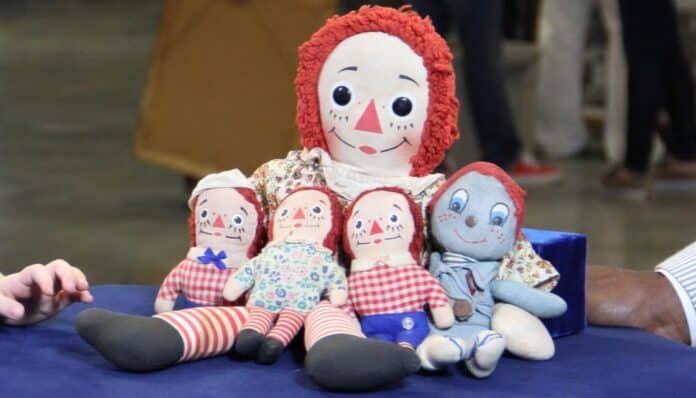
Raggedy Ann is a genuine century-old gift. Artist Johnny Gruelle created her and patented the doll in 1915, and the dolls were in stores by 1918.
Raggedy Andy arrived in 1920 as her brother, and the pair grew into a popular line of books and toys. With soft cloth bodies, yarn hair and stitched faces, they became a fixture of American childhood.
Both dolls are still produced. They make an easy pick for a child who might enjoy something very different from today's interactive toys, and a vintage style doll can be a small piece of Christmas past for an adult who grew up with them.
Chemistry sets
Chemistry sets grew out of the portable lab kits that scientists and students carried in the 18th and 19th centuries. In the United States they became a children's educational toy in the 1910s.
A few milestones mark how they took off:
- The Porter Chemical Company of Hagerstown, Maryland, began selling Chemcraft sets in 1916, with chemicals, equipment and instructions in one box.
- A.C. Gilbert, already famous for the Erector Set, entered the market soon after.
- The two companies became major rivals, selling the sets as both thrilling toys and a possible first step toward a science career.
Sets from a century ago could hold chemicals and equipment no child would be handed today. Modern kits are much safer, with experiments matched to age, but the appeal is the same, since a curious kid with tools, instructions and freedom to experiment discovers science firsthand.
Also read: Monopoly Began as Lizzie Magie's 1904 Landlord's Game, a Warning About Greed
Based on reporting by History Facts
By Trivia News Staff | Culture