
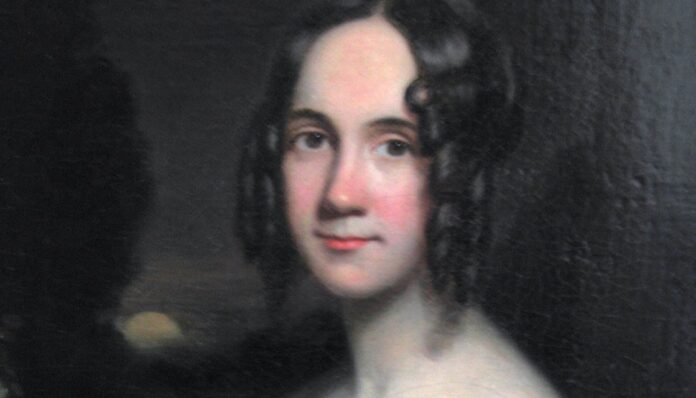
Abraham Lincoln signed the 1863 proclamation that made Thanksgiving a national holiday, and William Seward drafted it. But the person who did the most to get it written was a magazine editor named Sarah Josepha Hale, who had been pushing for it for more than three decades.
She is also the writer credited with “Mary Had a Little Lamb,” first published as “Mary’s Lamb.” The nursery rhyme turned out to be one of the smaller things she did.
The editor behind the holiday
Hale helped found the American Ladies Magazine and used it to champion women’s causes. In 1837 she was offered the editorship of Godey’s Lady’s Book, a job she kept for more than 40 years.
Under her, Godey’s grew to a circulation of more than 150,000 by the eve of the Civil War. That made it one of the most influential magazines in the country, and it gave her a very loud voice.
She used it well beyond the kitchen and the parlor. Hale campaigned for women’s education, including the founding of Vassar College in Poughkeepsie, New York, and raised money to build the Bunker Hill Monument in Massachusetts and to save George Washington’s home at Mount Vernon.
A New England custom she wanted for everyone
Hale was born in New Hampshire and grew up keeping an annual Thanksgiving, which was already a popular fall tradition in parts of the country. Her 1827 novel, Northwood: A Tale of New England, gave the holiday a whole chapter.
At Godey’s she kept returning to it in editorials and articles. She wrote to state and federal officials asking for a fixed national day of thanks on the last Thursday of November, arguing that a shared holiday could calm the widening split between North and South.
By 1854, more than 30 states and territories had a Thanksgiving of their own on the books. A single national day still did not exist.
Test yourself
How much have you picked up so far?
3 quick questions on what you have read so far. The story continues below.
The idea was older than her campaign
Hale did not invent the notion of a national Thanksgiving. The Continental Congress declared several days of thanks during the Revolution to mark military victories.
In 1789 the newly inaugurated George Washington called for one to celebrate the end of the war and the ratification of the Constitution. John Adams and James Madison issued their own proclamations later on.
Thomas Jefferson declined, feeling the religious tone of such a day sat badly in a nation that separated church and state. After 1815, no formal national declarations were made at all.
War did not stop her
When fighting broke out in April 1861, Hale kept writing. She urged Americans to "put aside sectional feelings and local incidents" and gather around a common day of thanks.
Both sides kept the holiday through the war, each for its own reasons:
- Confederate President Jefferson Davis issued Thanksgiving proclamations in 1861 and 1862 after Southern victories
- Lincoln called for a day of thanks in April 1862, after Union wins at Fort Donelson, Fort Henry and Shiloh
- Lincoln did it again in the summer of 1863, after the Battle of Gettysburg
Winslow Homer even drew the holiday at the front. His illustration "Thanksgiving in Camp" ran in Harper's Weekly on November 29, 1862.
The letter of September 28, 1863
Shortly after Lincoln's Gettysburg proclamation, Hale wrote to both the president and Seward. Only the chief executive, she argued, could make the holiday "permanently, an American custom and institution."
Her letter is dated September 28. Whether Lincoln was already leaning toward a national proclamation is unclear, but within a week Seward had drafted one setting Thanksgiving on the last Thursday of November.
The two men hoped it would help "heal the wounds of the nation." After more than 30 years of letters and editorials, Hale had her holiday.
Also read: The White House Turkey Pardon Only Became Official in 1989, and Truman Never Gave One
One more change to come
The date did not stay put. In 1939 Franklin Roosevelt moved Thanksgiving up a week to stretch the Christmas shopping season during the Great Depression, and 23 states refused to go along, leaving the country with two competing Thanksgivings.
Roosevelt backed down two years later. In the fall of 1941, Congress passed a resolution fixing the holiday on the fourth Thursday of November, where it has stayed ever since.
Based on reporting by History.com
By Trivia News Staff | History