
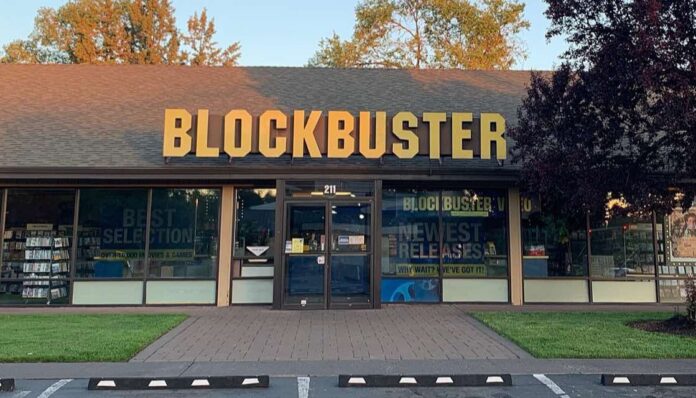
In 2004 there were more than 9,000 Blockbuster Video stores across the United States, each packing some 6,000 square feet of DVDs, VHS tapes, video games and candy. Six years later the company was in bankruptcy, undone by Netflix and on-demand entertainment.
Today a single independently owned Blockbuster still operates, in Bend, Oregon, kept alive partly because high-speed internet has been slow to reach the surrounding area. Here is how the blue and yellow giant rose, and some of the stranger things it did along the way.
It started with an oil bust in Dallas
Blockbuster exists partly because oil prices fell. In 1985 Dallas entrepreneur David Cook was nursing a stack of unpaid invoices from the oil companies he wrote inventory software for, after the oil market collapsed.
His wife, Sandy, suggested a video store. The timing was good, since the number of VHS rental stores had jumped from 7,000 in 1983 to 19,000 in 1986, and the Cooks decided the business needed a mega-store with far more titles than any independent shop.
The tapes stayed on the shelves
Rental shops of the 1980s had a theft problem, so most put an empty box on the shelf and handed over the tape at the counter. Blockbuster could not work that way, because the Cooks opened with 8,000 to 10,000 titles and there was no room for a back room big enough.
So the tapes sat right on the shelves, and customers could see at a glance what was actually in stock. It was the first video store to do it.
The Cooks also chose to carry no adult films at all. It was a business decision rather than a moral one, since Cook said many families shopped there precisely because of it.
Test yourself
How much have you picked up so far?
3 quick questions on what you have read so far. The story continues below.
Nintendo took it to court
When video games came roaring back in the 1980s, rental chains started renting them too. Nintendo sued Blockbuster in 1989 for copyright infringement, complaining that stores were photocopying game manuals.
Blockbuster said it was only replacing worn-out originals. The two settled out of court.
Late fees were a gold mine
Rentals ran for one or three days, and the fines started the moment a tape came back late. In 2000, late fees brought in $800 million, a full 16% of the company's revenue.
When Blockbuster announced "no more late fees" in 2004, the New Jersey attorney general objected. A movie kept long enough could still end up costing the customer the price of buying it.
Some ideas that went nowhere
Blockbuster tried plenty of things beyond renting movies:
- In 1994 it opened the Blockbuster Block Party in Albuquerque, New Mexico, a 60,000-square-foot "adult amusement park" with laser tag, mazes and motion simulator rides
- That same year its Blockbuster Music spin-off banned long hair and earrings for male employees, limiting hair to 2 inches past the collar, and workers who sued lost on appeal in 1998
- In the 1990s it held exclusive rights to certain titles, such as Lolita in 1997, which smaller shops could not get
- In 1998 it advertised on dry cleaning bags and hangers, with coupons stapled on
The meeting it would regret
In 2000, Netflix chief executive Reed Hastings met with Blockbuster to pitch running its online business. Netflix was then a young DVD-by-mail company.
Blockbuster could not see what Hastings could add to its hugely successful operation, and according to Forbes he was laughed out of the room.
A kitchen sink in the mail
Pressed by Netflix and Redbox kiosks, Blockbuster launched its own mail rental service in 2004. When Hastings told a conference call that Blockbuster had thrown "everything but the kitchen sink" at Netflix, a kitchen sink arrived from Blockbuster the next day.
The end of the chain
In 2008 Blockbuster tried to buy the struggling Circuit City for $1 billion, but the electronics chain went bankrupt the following year. Blockbuster then lost a billion dollars on its own in 2010 and filed for bankruptcy.
Its empty storefronts were still in demand, since they sat in busy strip mall spots, and pawn shops and cell phone stores snapped many of them up in Florida, Puerto Rico and elsewhere.
The last official Blockbuster location closed in November 2013. Its final rental was Seth Rogen's 2013 comedy This Is the End, and yes, the customer still had to bring it back.
Also read: A Teenie Beanie Baby From a Happy Meal Sold for $1,799, and 7 More Toys Worth Money
Based on reporting by Mental Floss
By Trivia News Staff | Culture