
The monster that has stomped through more than 70 years of movies started as something much darker than a pop culture mascot. In the 1954 Japanese film Gojira, the giant creature stood in for a fear every viewer in Japan understood: nuclear destruction.
Months before the film opened, a U.S. hydrogen bomb test in the Pacific had dusted a Japanese fishing boat with radioactive fallout. That incident, layered on the memory of Hiroshima and Nagasaki, shaped the monster from the first scene onward.
A country still living with the bomb
Less than ten years earlier, Allied forces had dropped atomic bombs on Hiroshima and Nagasaki, killing about 120,000 people instantly and injuring many thousands more. Japan’s defeat, once unimaginable, arrived almost overnight.
By 1954 the country had rebuilt a great deal, but the threat had not gone away. American nuclear tests at Bikini Atoll in the Marshall Islands kept the wounds fresh, and the Korean War and Cold War tension kept nuclear war in the headlines.
Castle Bravo and the Lucky Dragon
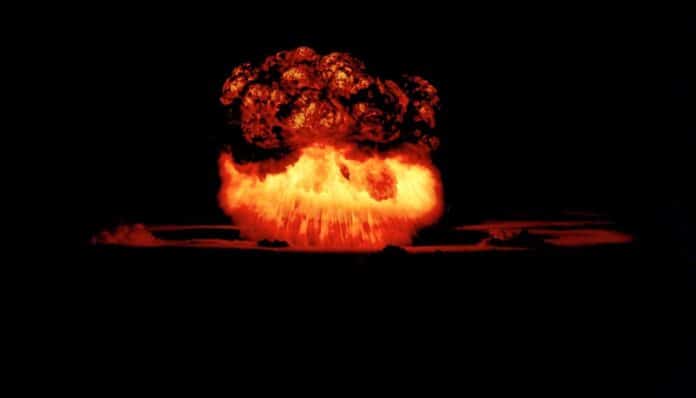
In March 1954 the United States set off Castle Bravo, a 15 megaton hydrogen bomb, at Bikini Atoll. It was more than 750 times as powerful as the bombs dropped on Hiroshima and Nagasaki.
A huge cloud of radioactive dust and debris drifted across some 7,000 square miles of ocean. It fell on the Japanese trawler Daigo Fukuryū Maru, known in English as Lucky Dragon No. 5.
What followed for the crew and the country:
- All 23 crew members showed radiation symptoms, including skin burns, and were quarantined when they reached port.
- Six months later the boat’s chief radio operator developed liver complications and died at 40.
- In 1955 the U.S. government paid Japan $2 million in a settlement over the fallout, without admitting legal liability.
- The incident helped launch a nationwide antinuclear movement in Japan.
A monster made from war memories
Gojira tells the story of a radioactive beast that rises from the sea and rampages across Japan. Director Ishirō Honda opened the film with a Japanese fishing boat wiped out by a mysterious flash and blast, an echo of the Lucky Dragon that audiences could not miss.
Honda said most of his imagery came from his own experience of the war, when Tokyo and much of Japan were reduced to ashes and Hiroshima was destroyed. He took the qualities of an atomic bomb, he explained, and gave them to Godzilla. Hollywood monster films such as King Kong (1933) were an influence too.
Building the creature
King Kong had used stop motion animation, but special effects director Eiji Tsuburaya knew that method was too slow for Gojira’s tight schedule. His team built a monster suit instead, mixing features from dinosaurs including Tyrannosaurus, Iguanodon and Stegosaurus.
Haruo Nakajima, the actor inside the suit, studied bears and elephants at the zoo to work out how the creature should move. He went on to play Godzilla in 12 films.
A victim as well as a villain
In the film, the monster is finally destroyed by a superweapon called the Oxygen Destroyer. Its inventor, Dr. Daisuke Serizawa, wears an eye patch over a wound from World War II, and the story makes plain that beating one terrible weapon takes another.
That leaves Godzilla oddly sympathetic. Yuki Miyamoto, a professor of religious studies at DePaul University, has pointed out that the creature was woken by nuclear tests and can be seen as a bombing victim himself, and that his scales resemble the radiation burns survivors suffered.
From mixed reviews to a classic
About 9.6 million people in Japan saw Gojira during its first run. Reviews were mixed at the start, but it came to be ranked among Japan’s greatest films, released in the same golden decade as Seven Samurai, Ikiru and Rashomon, as the country rebuilt and returned to the world stage.
Americans got a heavily reworked version in 1956, Godzilla, King of the Monsters!, which added scenes with Raymond Burr as an American reporter and softened the antinuclear message. The original spawned a long run of sequels, and Godzilla Minus One (2023), set in postwar Japan, went back to the trauma at the heart of the 1954 film and won the Academy Award for visual effects in 2024.
Based on reporting by History.com
By Gregory Lamb | Culture