
In the Gilded Age, wealthy Americans showed off celery. They displayed the stalks upright in special glass celery vases at the center of the table, because the vegetable was hard to grow and expensive to buy.
Celery was only the start. The richest families of the 1870s to 1900 also feasted on turtle soup, towering meat jellies and oysters that had once been cheap street food, dishes that might make a modern diner pause.
The age of new money
The Gilded Age was the flashy stretch from the 1870s to 1900, powered by fortunes made by tycoons such as Vanderbilt and Carnegie. That money paid for the gold leaf of New York’s Fifth Avenue and the cliffside “cottages” of Newport, Rhode Island, along with lavish balls and dinners.
Servants and working class families ate simple meals and leftovers. The upper crust, meanwhile, ate a strange and showy mix, and the HBO series The Gilded Age has brought many of those dishes back into view.
1. Celery, the centerpiece
Today celery is mostly the free side that comes with chicken wings. In the 19th century, aristocrats treated it as a prize, standing the stalks in decorative glass vases for guests to admire.
As growers produced more of it and prices fell, chefs began cooking with it, braising and dressing it in new ways. The status symbol slowly became an ordinary vegetable.
2. Oysters on the half shell
Oysters started out as a working class staple in coastal cities, much like lobster. Dock workers shucked and slurped them on New York streets long before they appeared on elegant menus.
By the Gilded Age, high society was obsessed with them. They arrived raw on beds of crushed ice or baked in rich preparations, and they often opened the meal.
3. Turtle soup
Soup was the standard second step. Menus from restaurants such as Delmonico’s and etiquette guides of the time agree, and Godey’s Lady’s Book advised hosts to begin dinner with raw oysters and then offer one or two soups.
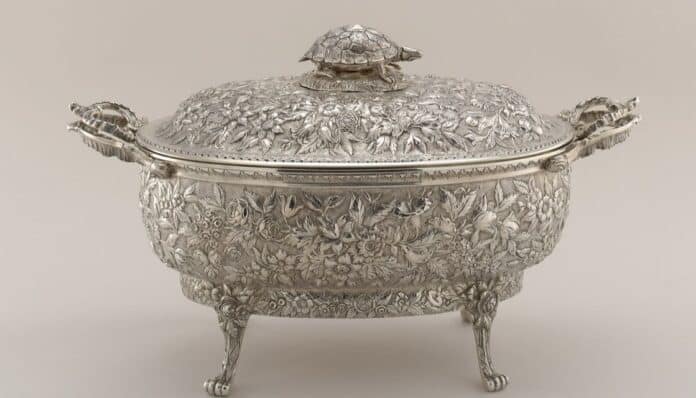
The most fashionable choice was turtle soup, now rarely served because of strict conservation rules. Chefs favored the diamondback terrapin, found from Cape Cod down the Gulf Coast, which was boiled, chopped and finished with a splash of sherry.
Also read: What the Pilgrims Actually Ate at the First Thanksgiving in 1621
4. Aspic, the savory jelly sculpture
Long before Jell-O molds took over 1950s kitchens, Gilded Age chefs built towering aspics. These savory gelatin sculptures came over from Europe and were made by boiling animal bones, before powdered gelatin became common in the late 1800s.
Meat, fish, vegetables and eggs hung suspended inside the clear broth like objects in a display case. Served partway through long formal banquets, a colorful aspic was both a centerpiece and proof of a chef’s skill.
5. Charlotte russe
The name may bring to mind a 2000s clothing chain, but the cake came first. French chefs created it in the late 18th century, reportedly in honor of Queen Charlotte, as a ring of ladyfingers around cold Bavarian cream or custard topped with berries.
It was a star of Gilded Age dessert tables at wedding breakfasts and banquets, sometimes dressed up with a decorative ribbon. In the 20th century it traveled from Delmonico’s white tablecloths to the streets of Brooklyn, where pushcart vendors sold simple versions in cardboard cups to working class New Yorkers.
What a full dinner looked like
Put together, a formal Gilded Age dinner followed a familiar pattern:
- Raw oysters to open
- One or two soups, turtle if the host could manage it
- An aspic partway through the courses
- Charlotte russe or another showpiece for dessert
- Celery on display in its glass vase as the centerpiece
Based on reporting by Mental Floss
By Jennifer Howell | Culture