
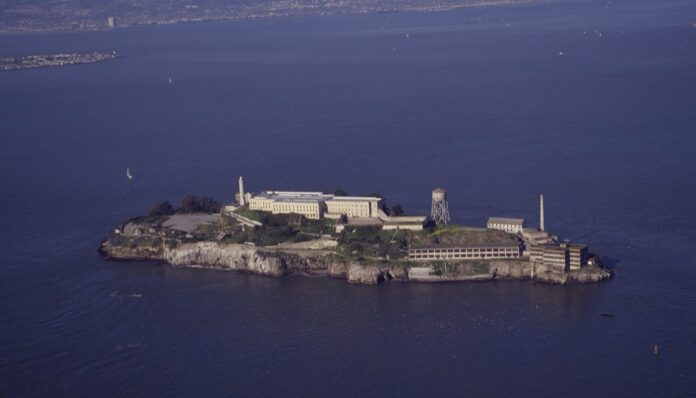
In 1962, three inmates vanished from Alcatraz and were never seen again, and to this day nobody can say for certain whether they drowned in San Francisco Bay or made it to shore. That single unanswered question has done more for the island’s legend than any other story told about it.
The prison has gathered plenty of other tales over the decades, from shark-filled water to ghostly footsteps. Some hold up, and some fall apart once you look at the record.
The escape nobody can close
Frank Morris and the brothers John and Clarence Anglin slipped out of their cells after leaving dummy heads in their beds to fool the guards. They had spent months on the plan, stitching a raft and life preservers out of more than 50 raincoats.
Searchers later turned up pieces of the raft, paddles and a homemade life vest. No bodies were ever found, the men never resurfaced, and the FBI spent years on the case without deciding whether they died in the water or reached land, so their fate is still officially open.
Did no one ever escape?
Alcatraz is famous as the prison nobody broke out of, and the truth is murkier than the slogan. Many inmates tried, and nearly all were caught, killed or presumed drowned.
No prisoner is confirmed to have escaped and stayed free. A few men did get off the island, but they either died or disappeared, and because the 1962 trio was never found, the claim that no one escaped remains unproven rather than settled.
Where the nickname came from
Alcatraz is a steep, rugged block of stone in the middle of the bay, so calling it The Rock was natural. The name also suited its years as a military and then federal prison, when its isolation made it feel like solid stone with no way out.
People who lived and worked there used the nickname daily, and it became part of the island’s identity.
Sharks were not the real danger
Sharks do swim in San Francisco Bay, but they were never the main reason escape was so deadly. The bigger threats were these:
- water cold enough to bring on hypothermia quickly
- strong currents and fierce tides
- the long distance to shore
- exhaustion setting in partway across
The city was close enough to see from the cellblock, which made freedom look near. Historical accounts point to the cold and the tides, not the sharks, as the true barrier, and the shark story survived mainly because it made a frightening swim sound even worse.
Also read: The Tower of London Held Polar Bears, Spies and a Nine-Day Queen
The Birdman never kept birds there
Robert Stroud became the Birdman of Alcatraz, a name made famous by the 1962 film starring Burt Lancaster. The title suggests a man surrounded by birds on the island.
In fact his bird research happened mostly at Leavenworth prison in Kansas. After his transfer to Alcatraz in 1942 he was kept apart from other inmates and was not allowed to continue that work.
Solitary was punishment, not daily life
The prison’s punishment cells, especially the one known as the Hole, fed an image of every inmate locked alone in the dark. Solitary was actually reserved for prisoners who broke the rules.
Conditions there could be harsh, but the idea that most men served their time alone is an exaggeration.
A lighthouse came first
The island’s first landmark was not a cellblock. Alcatraz was home to the first lighthouse on the U.S. West Coast, built in 1854 to guide ships through the busy bay, about 80 years before the federal prison opened in 1934.
The military also fortified the island in the 1850s, and it later became the nation’s first official Army prison. Only in 1934 did it pass to civilian control as a maximum security federal penitentiary.
Why it really closed
The 1962 escape came just months before the prison shut in 1963, which makes it tempting to connect the two. The real reason was money.
Running a prison on an island was very expensive, aging buildings needed major repairs, and even fresh water arrived by barge. The escape highlighted those problems, but cost and decay were what ended it.
The ghost stories
Visitors and former staff have reported strange sounds and unexplained moments, and the island has all the makings of a haunted place. No scientific evidence supports the idea that it is.
The ghost tales are best seen as folklore that grew around a remote, violent and lonely place, and they are now as much a part of The Rock as its cells.
Also read: Mount Rushmore Was Supposed to Have Torsos, and 11 Other Landmark Secrets
Based on reporting by WanderTrivia
By Daniel Mercer | Landmarks