
A mint-condition Superman lunch box from 1954 can sell for as much as $13,000, which makes it the most valuable school lunch container ever made, according to toy and pop-culture expert Mark Bellomo. That figure would have stunned the kids who carried one to class with a sandwich inside.
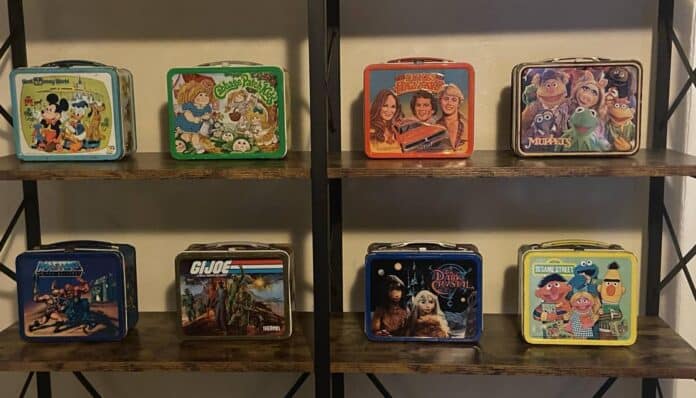
For decades, the lunch box was the loudest thing a child brought to school. The metal carriers were covered in teen idols, cartoon heroes and TV stars, from Batman to Snoopy to the Monkees, and today the same boxes drive a lively collecting market.
A museum built on nostalgia
In Columbus, Georgia, Allen Woodall runs what he calls the largest lunch box museum in the world, with more than 1,300 metal boxes. He got hooked in the 1980s when he bought a 1967 box showing the Green Hornet, his childhood radio and comic-strip hero, and at 83 he still welcomes hundreds of visitors a year.
Woodall says most of them are hunting for the box they carried as children. Many cannot remember it until they spot it on the shelf, and then their faces light up.
For years, kids hauled lunch in plain buckets and later in paper bags. Television changed that in the 1950s by kicking off a golden age of character licensing. Collector Thad Reece puts the numbers at more than 120 million metal lunch boxes in over 450 designs sold between 1950 and 1970 alone.
The best examples now sell for up to 10,000 times what they cost new. The Smithsonian National Museum of American History holds more than 240 of them in its permanent collection, and Woodall calls them time capsules. Here are nine of the most sought after.
Test yourself
How much have you picked up so far?
3 quick questions on what you have read so far. The story continues below.
Mickey Mouse, 1935
This is where it all began, although Bellomo insists it is technically a lunch "kit" rather than a lunch box. Tin toy maker Geuder, Paeschke & Frey produced the oval metal pail, which closes with a wire handle and shows Mickey and his "Steamboat Willie" pals playing around the sides.
It sold for 10 or 20 cents, a price many families could not spare during the Depression, so few survive. It was also the first time a licensed character appeared on a lunch item. Woodall calls it the holy grail, and it can now bring up to $2,000.
Hopalong Cassidy, 1950
It took manufacturers another decade or so to see that a famous face could sell lunches. In 1950, Aladdin Industries, a lamp company that had moved into insulated vacuum bottles, made the first true lunch box with a licensed character, and it came with a matching thermos tucked inside.
The draw was the cowboy himself, played by William Boyd, one of the biggest stars of his day. Aladdin sold more than 600,000 of the boxes in the first year. Because so many were made they are not rare, but a mint example can still reach $500.
Superman, 1954
Produced by Universal, this box shows the Man of Steel fighting robots and rescuing a woman in danger. Bellomo ranks it first among all lunch boxes, with a mint copy worth up to $13,000.
Toppie, 1957
Perhaps as few as 12 of these yellow boxes still exist. Shoppers could only get one with Top Value Stamps, the trading stamps Kroger handed out in the Dayton, Ohio, area, and the box carried the program's plaid cartoon mascot.
Bellomo values a mint Toppie at about $6,000. Even a worn one is prized: Eric Bradley of Heritage Auctions says a collector paid $2,717 for a far-from-perfect example in 2003.
Three standouts from 1963
By the 1960s lunch boxes were everywhere, and 1963 produced three that collectors still chase:
- The Beatles. Aladdin's powder-blue box arrived just as Beatlemania took off, showing the band in action with their faces and autographs. Heritage Auctions sold one for $750 in 2015, and Bellomo now puts a mint copy at around $1,820.
- The Jetsons. Aladdin's domed box shows the cartoon family's daily routine and came with a matching thermos. A mint one can sell for up to $1,700.
- Orbit. This Thermos box rode the space race craze, but its images of John Glenn in his Mercury capsule turned out to be lifted from National Geographic. A cease-and-desist letter halted production, which is why a mint copy now costs up to $3,200.
The side of a lunch box looks a lot like a TV screen, and Woodall notes that television themes ruled the metal boxes for their whole run.
Campus Queen, 1967
Not every box carried a licensed star or targeted boys. Starting in the 1950s, designs called "Debutante," "Corsage," "Junior Miss" and "Miss America" were aimed at girls, and today they serve as a reminder of the gender stereotypes manufacturers leaned on.
King Seeley Thermos Company was facing tough competition from vinyl box makers, and an invented campus queen cost nothing in licensing fees, so each sale earned more. A mint Campus Queen, which the Smithsonian also owns, is worth about $330.
Rambo, 1985
The metal lunch box era ended for good in 1985. Some collectors, Woodall among them, blame worried mothers who supposedly pushed to ban the boxes as potential weapons, but that story appears to be an urban legend.
Cheaper vinyl and plastic during the 1980s is the more likely culprit. That year Thermos made what is believed to be the last metal lunch box with a licensed character, showing Sylvester Stallone as Rambo with an AK-47. A mint copy brings only about $380, but it closed out half a century of cafeteria history.
Based on reporting by History.com
By Trivia News Staff | Culture