
On a mid-August day in 1936, with the thermometer at 120 degrees Fahrenheit in Altus, Oklahoma, locals thought Jasper Pendleton was riding his bicycle in shorts. He was not. He had simply rolled up his pants legs to cope with the heat, and in much of America that difference still mattered.
That summer, the United States and Canada baked for three months under a series of record heat domes now called the 1936 North American heat wave. It killed thousands, set temperature records that still stand, and forced a country with almost no air conditioning to rethink some of its oldest habits, including what people were allowed to wear outside.
Many cities had laws against wearing shorts in public, says Geoff Williams, author of the 2026 book The Summer of Death: The Great Heat Wave of 1936 and the Making of Modern-Day America. They just rarely called them that.
A brutal winter came first
The year actually opened with one of the coldest winters in American history. Langdon, North Dakota, stayed below zero for 41 days in a row, and Parshall, on the other side of the state, dropped to minus 60.
Warm weather in May surprised nobody. The mid-1930s were the worst of the Dust Bowl years, and a heat wave in August 1934 had already killed nearly 1,500 people. What shocked Americans was how much worse 1936 became. Williams describes a heat dome parked over the whole country: May was hot, June was worse, July was miserable, and August brought no relief.
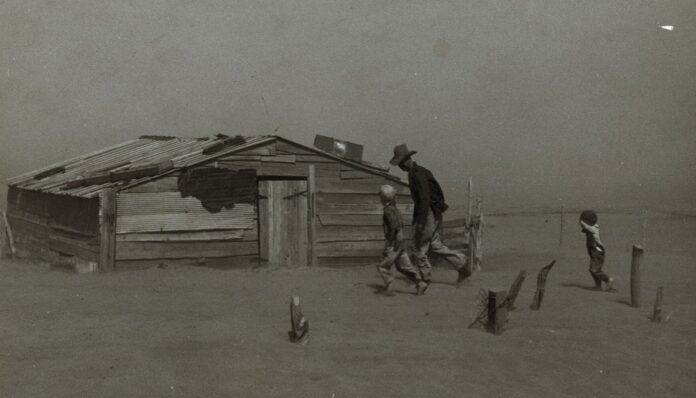
The Upper Midwest and Great Plains suffered most. Years of drought and overworked farmland had already stirred up huge dust storms, and with bare, dry soil the region took on what the National Weather Service called desert qualities.
Test yourself
How much have you picked up so far?
3 quick questions on what you have read so far. The story continues below.
Records that still stand
Averaged across the lower 48 states, the summer of 1936 came in at 74 F. Only 2021 has topped it, and only by one-hundredth of a degree. Many Midwestern cities set records above 105 F that have never been broken, according to weather service data.
A few of the worst days:
- Bloomington, Illinois, reached 112 degrees on July 6
- Aberdeen, South Dakota, reached 114 degrees on July 10
- Salina, Kansas, reached 116 degrees on July 18, when sunlight through a window was strong enough to set a house on fire
A death toll far higher than recorded
Most homes, hotels and even hospitals had no air conditioning, which left millions of people exposed. The usual estimate puts the national death toll near 5,000. Williams went through old newspapers and worked with many historical societies, and he now estimates that at least 11,000 Americans and about 780 Canadians died directly or indirectly because of the heat.
The heat also pushed people together. Crowds filled movie theaters, 40% of which had air conditioning at the time, and some people slept there overnight. Others bedded down in parks and on courthouse lawns, though Williams points out that sleeping beside a couple of hundred strangers who chat and talk in their sleep is harder than it sounds.
Deadly in unexpected ways
Heatstroke and heart attacks were only part of it. Exhaustion and sleeplessness led to rash choices and simple mistakes. People swam in polluted rivers and floated on inner tubes without knowing how to swim, and sand-pit swimming holes along rivers swallowed some of them. In Nebraska, a middle-aged man fell off his roof while trying to sleep up there.
Everyday objects turned dangerous too. A house with a tin roof burned down in New York after the metal grew too hot, tire blowouts caused crashes, and electric fans without protective cages injured people all over the country. As Williams puts it, heat finds a lot of creative ways to kill.
The fight over shorts in Yonkers
In July, the Des Moines Tribune reminded readers that wearing very little clothing was perfectly legal in their city, a sign of how relaxed Des Moines was on the subject. Yonkers, New York, was another story, because it had an actual ban on shorts in public.
On July 10, Rose O'Gorman and William Matthias were each fined $10, about $220 in today's money, for wearing shorts in Yonkers. They had worn them hoping to be arrested. A sympathetic judge suspended the fines, but the pair took the case to the New York Court of Appeals anyway, and in 1937 they won, freeing bare legs in that New York City suburb for good.
The heat wave did not set off an immediate fashion revolution. Williams says society mostly went back to hats and gloves, but the summer of 1936 changed a lot of minds. Over the following decades more Americans accepted shorts, and by the 1950s they were here to stay.
Based on reporting by History.com
By Trivia News Staff | Geography