
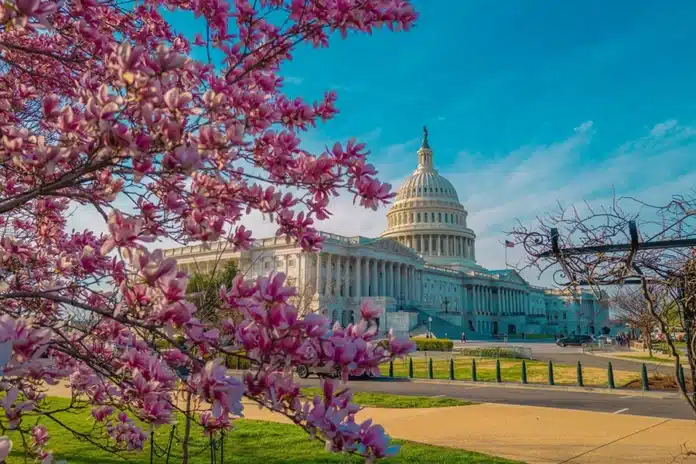
Washington, D.C. lives up to the hype — but showing up without a game plan is the fastest way to waste your time and your money there. It doesn’t matter how many trips you’ve taken; this city rewards the people who do a little homework first.
Two moves make the biggest difference. Plan your visit around the National Cherry Blossom Festival in late March or early April, and reach out to your member of Congress ahead of time to line up a free guided tour of the U.S. Capitol. The first saves you a mountain of logistical headaches. The second hands you a memory most tourists never get.
Here are 10 tips to help you get the most out of the nation’s capital.
1. Book a free Capitol tour through your representative
You can walk the halls of the U.S. Capitol on a guided tour for free — you just have to ask the right person. Your elected representatives and senators can arrange staff-led tours that go beyond what the general public sees, and their offices handle these requests all the time. Reach out a few weeks in advance and ask what’s available.
Picture standing inside the rooms where the country’s laws are actually written, with a guide walking you through the history at every turn. The neighbor who booked a generic bus tour saw the building from the sidewalk. You’ll see it from the inside.
You can find your representatives at congress.gov/members and book official Capitol visits through visitthecapitol.gov.
One important heads-up for 2025–2026: public tours of the White House are currently paused. They’ve been suspended since September 1, 2025, while the East Wing is demolished and a new ballroom is built, so don’t build your itinerary around one right now. Check the official status at whitehouse.gov/visit before you go, since dates can change.
2. Time your trip around the cherry blossoms
If any single sight in D.C. stops people in their tracks, it’s the cherry trees ringing the Tidal Basin. Nearly four thousand of them bloom at once each spring, turning the waterfront into something out of a watercolor. The National Cherry Blossom Festival stretches across roughly three weeks — in 2026 it ran March 20 through April 12 — while actual peak bloom usually lands in late March or early April and lasts only a handful of days.
Yes, it’s crowded during the festival. It’s worth it anyway. Get to the Tidal Basin before 8 a.m. and you’ll have those pink-framed views of the Jefferson Memorial nearly to yourself. Since bloom dates shift with the weather, watch the National Park Service Bloom Watch tracker at nps.gov before you commit to travel dates.
3. See the memorials after dark
The Lincoln Memorial at 2 p.m., wrapped in tour buses and a hundred people in matching T-shirts, is fine. The Lincoln Memorial at 10 p.m. — glowing against a black sky, the Reflecting Pool shimmering out front — is a completely different experience. Fewer people, more atmosphere, and a moment that actually feels like yours.
The memorials stay open 24 hours a day, they’re staffed by park rangers, and they’re safe to visit at night. It costs nothing and often becomes the highlight people remember most.
4. Skip the rental car — the Metro goes everywhere
Driving in D.C. is its own special punishment: one-way streets, traffic circles that seem designed to confuse you, parking that costs a fortune, and a street grid laid out in the 1790s with zero thought given to modern SUVs. The Metro is the antidote — clean, dependable, and it drops you right where you’re headed.
You don’t even need a special transit card anymore. Tap your regular contactless credit or debit card, or your phone, at the fare gate and you’re through. While you glide past the gridlock, the folks who rented a car are stuck fuming on Constitution Avenue. Plan routes and fares at wmata.com.
5. Reserve timed-entry passes before you leave home
The Smithsonian museums are free — wonderful news, right up until you reach the Natural History Museum on a Saturday morning and find a line snaking halfway to Maryland. Several of the most popular museums now use timed-entry passes, and the good slots disappear quickly.
Spend ten minutes at si.edu before your trip, pick the museums you care about most, and lock in your times. It’s a small task that spares you the gut-punch of getting turned away at the door.
6. Don’t miss the Library of Congress’s Great Hall
The Great Hall inside the Thomas Jefferson Building — the ornate original of the Library of Congress’s three Capitol Hill buildings — may be the most jaw-dropping interior in the entire city. Marble staircases, mosaic ceilings, and stained glass in every direction make it feel more like a European cathedral than a federal building.
Admission is free, but you’ll need to reserve a timed-entry pass in advance because capacity is limited. Once inside, head up to the observation gallery on the top floor for a look down into the Main Reading Room, where researchers still work among the stacks. Reserve at loc.gov.
7. Get lost in the neighborhoods
The city’s real personality lives in its neighborhoods, not just on the Mall. Georgetown has Federal-style row houses, independent boutiques, and waterfront restaurants that have nothing to do with politics. U Street carries deep jazz history and some of the best food in town. Capitol Hill surprises first-timers with its farmers’ market and quiet residential charm.
Give yourself at least one afternoon to simply wander. Pick a neighborhood, leave the museum map in your pocket, and explore on foot. You might stumble into a used bookstore, a hidden garden, or a long conversation with someone who’s lived there for forty years.
8. Eat a few blocks off the tourist trail
The restaurants sitting right next to the big attractions are almost never the best ones. Walk a few blocks in any direction and the food gets better while the prices come down. D.C. has a genuinely excellent dining scene that reflects how diverse the city is.
So next time you’re starving after the Air and Space Museum, resist the first place you spot. Head toward a residential street instead, ask a local where they actually eat, or filter your map app away from the tourist zones. You’ll eat better and pay less.
9. Cross the river to Old Town Alexandria
A short Metro ride — or a scenic walk across the Potomac — lands you in Old Town Alexandria, and most D.C. visitors never make the trip. It’s a colonial-era waterfront town of cobblestone streets, independent restaurants, antique shops, and a working harbor that feels like a different world from the marble monuments across the water.
Spend half a day drifting down King Street, ducking into shops, and lingering over a long lunch. It’s relaxed, it’s beautiful, and it gives your feet a break from all that pavement-heavy Mall walking. The Blue and Yellow Metro lines get you there in about fifteen minutes from downtown.
10. Skim the local news — you might catch history happening
Washington is where history unfolds in real time. On any given day there might be a Senate vote heading for tomorrow’s front page, a foreign leader’s motorcade rolling down Pennsylvania Avenue, or a protest that people will still be talking about decades from now. Follow only the standard tourist script and you could walk right past all of it.
Skim The Washington Post one morning, or just open its app. Five minutes tells you what’s happening in the city that day — and it might nudge you to swing by the Capitol at the right hour, or put you in the right place at exactly the right time.
Quick D.C. planning checklist
- Weeks ahead: Contact your representative about a Capitol tour (congress.gov/members); check White House tour status (whitehouse.gov/visit).
- Before you leave: Reserve Smithsonian (si.edu) and Library of Congress (loc.gov) timed passes.
- Traveling in spring? Track peak bloom on the NPS Bloom Watch (nps.gov).
- On the ground: Leave the car behind and tap your card on the Metro (wmata.com).
- For the memories: See at least one memorial at night, and set aside a half-day for Old Town Alexandria.
Frequently asked questions
Is it really free to tour the Capitol?
Yes. Staff-led Capitol tours are free, and your congressional office can help arrange one. Book official visits through visitthecapitol.gov.
Can I tour the White House right now?
Public White House tours are currently suspended due to construction that began September 1, 2025. Confirm the latest status at whitehouse.gov/visit before planning around one.
When is the best time to see the cherry blossoms?
Aim for late March to early April, when peak bloom usually occurs, but check the NPS Bloom Watch first — the peak lasts only a few days and shifts with the weather.
Do I need a car in D.C.?
No. The Metro reaches nearly everything you’ll want to see, and you can pay by tapping a contactless card or phone. Driving and parking are more hassle than they’re worth.